
Tactile 3D design
Accessibility for blind and visually impaired people does not stop at the screen. A map, a building, an object in a museum, an evacuation plan: I make it physical, so it can be explored by hand. Distinct shapes, different textures, high contrast, and no details that vanish in print. I test every model myself, because I am the user it is made for.
Who it is for: museums, public buildings, schools, tourist attractions, architects and organisations.
Deliverables: design, sample, testing and finished models in the quantity you need.
Languages: Danish and English, braille as needed.
Related case: LFBS, Fredericia, Denmark. 3D printing workshop for blind children and their parents, booked two years running.
What you get
A model designed for your place and your users, with distinct shapes, different textures and high contrast.
A sample you can try before we print the final piece.
Testing by hand, by me and by your users.
Printing and delivery, ready to use, in the quantity you need.
Methods and materials
- Design in code
- AI-assisted modelling
- 3D printing
- Braille
- Tactile textures
- High contrast
- Tested by hand
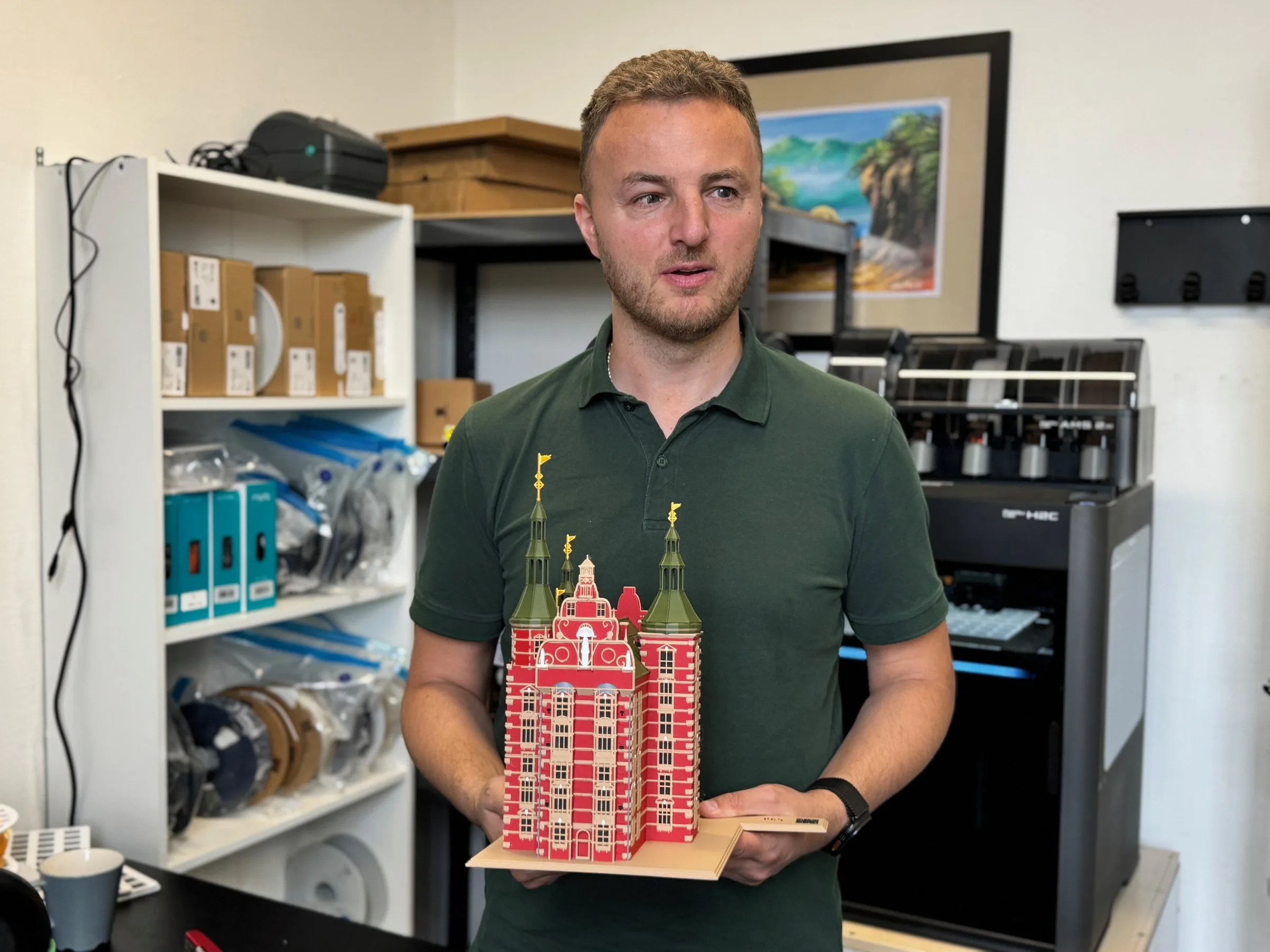
I test every model by hand before you get it.
I am the user the model is made for. What my fingers cannot read does not go to print.
What I design
- Tactile evacuation plans for public buildings and workplaces.
- City and area maps for attractions, stations and campuses.
- Museum objects in miniature, so blind visitors can experience the exhibition.
- Architectural models of buildings and monuments.
- Signage in tactile form with braille.
- Learning models for schools and universities.
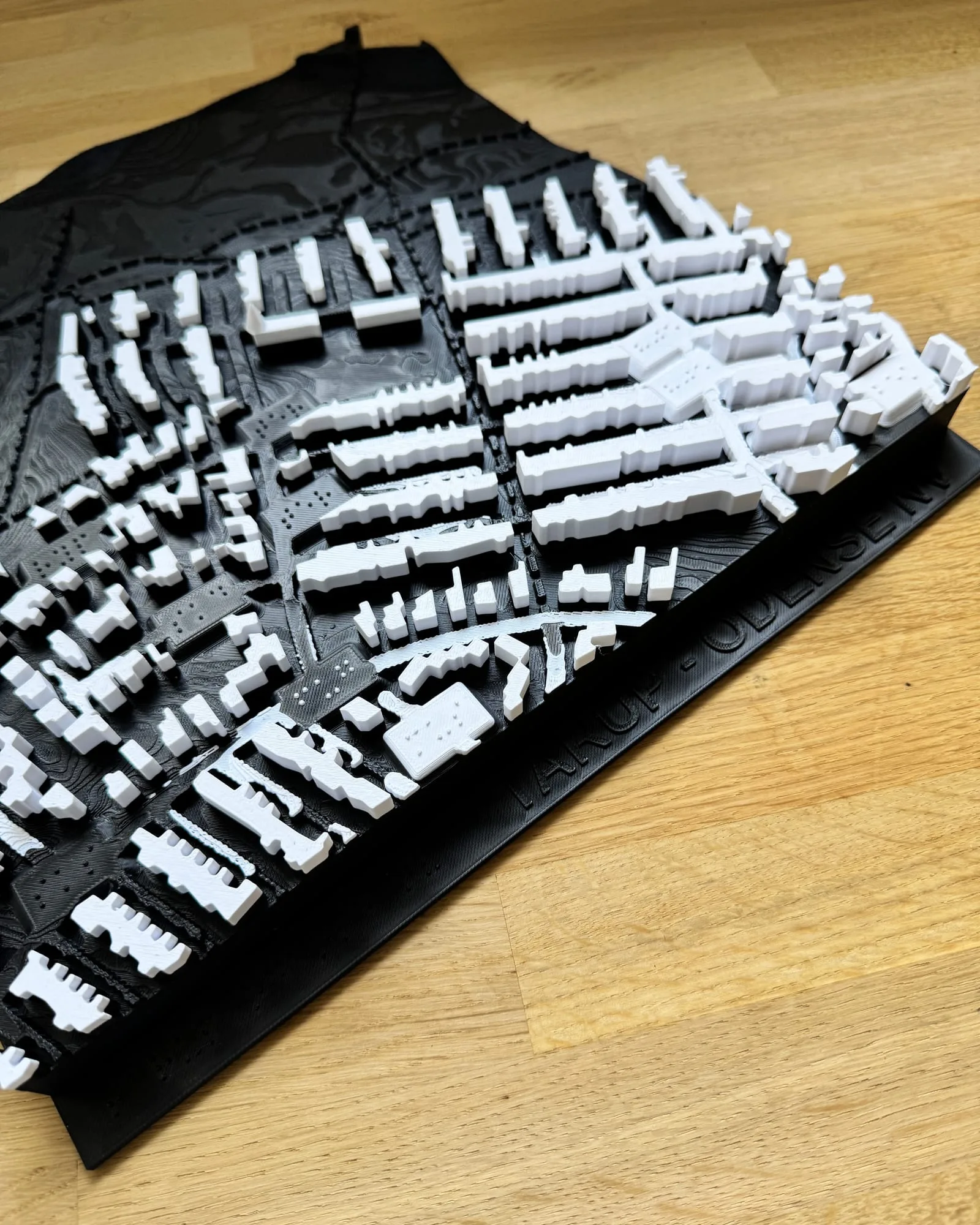
Tactile city map of Tarup, Odense NV, with terrain, streets and braille. 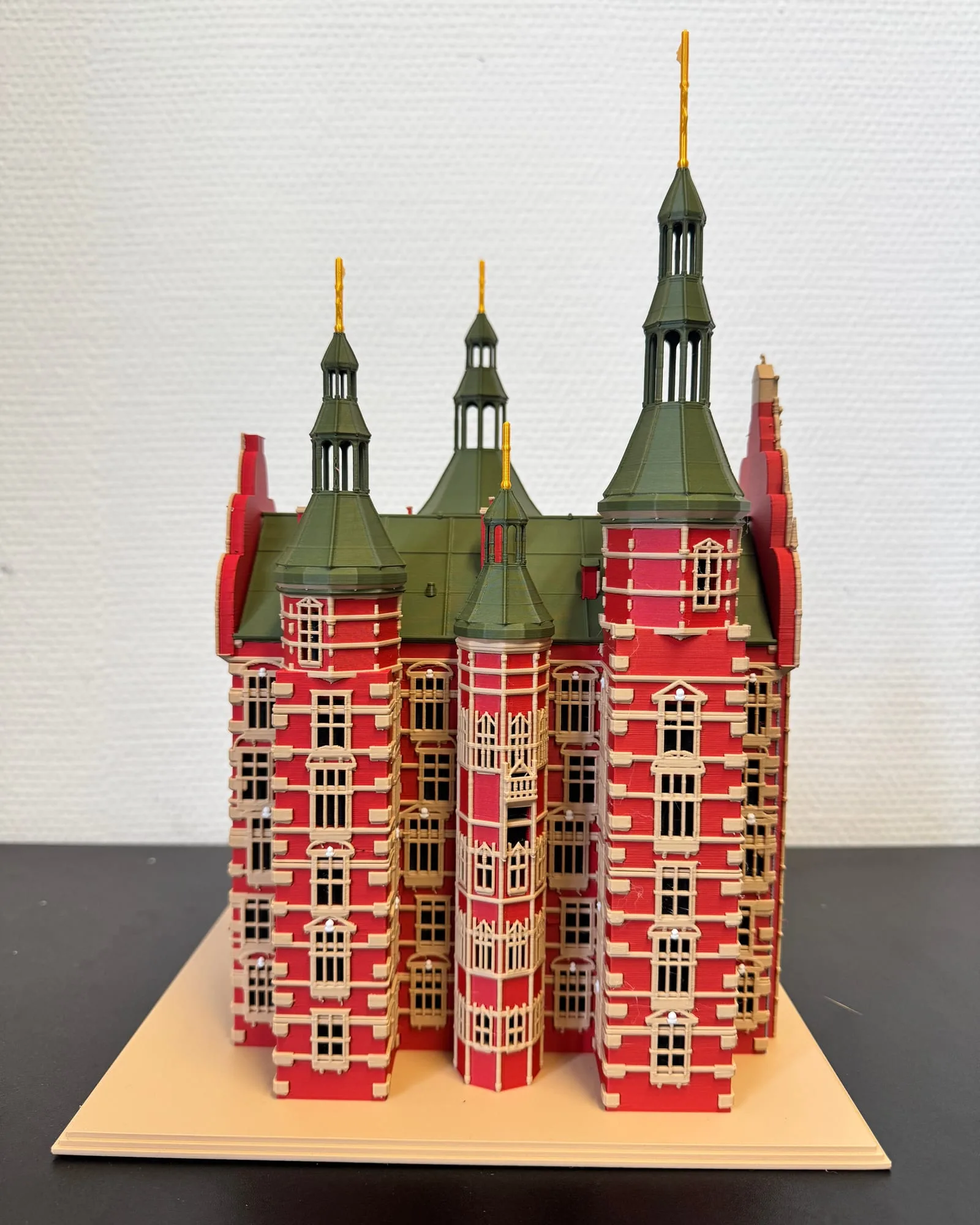
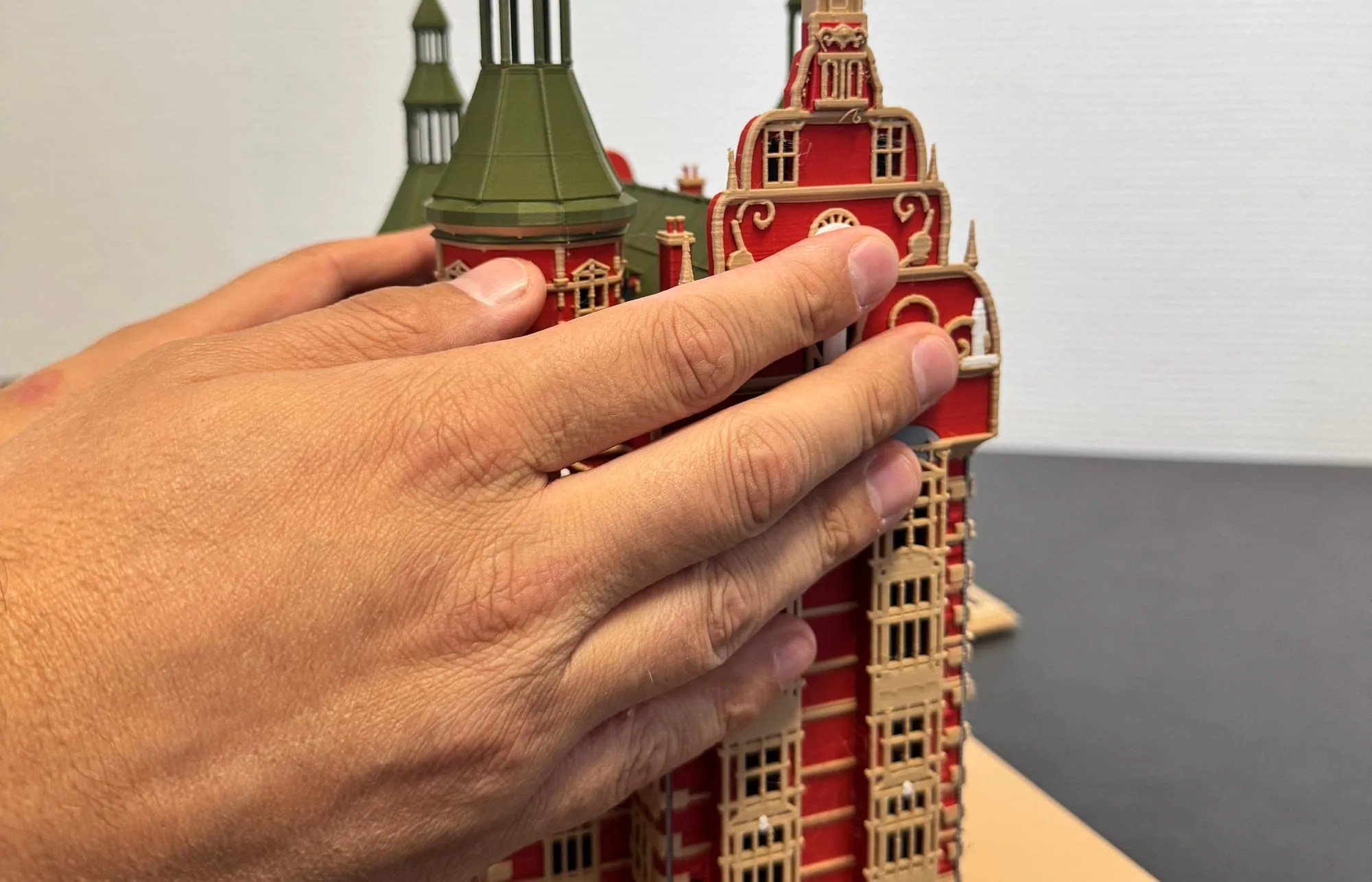
Rosenborg Castle in miniature, printed in four colours, with braille and a QR code on the base. 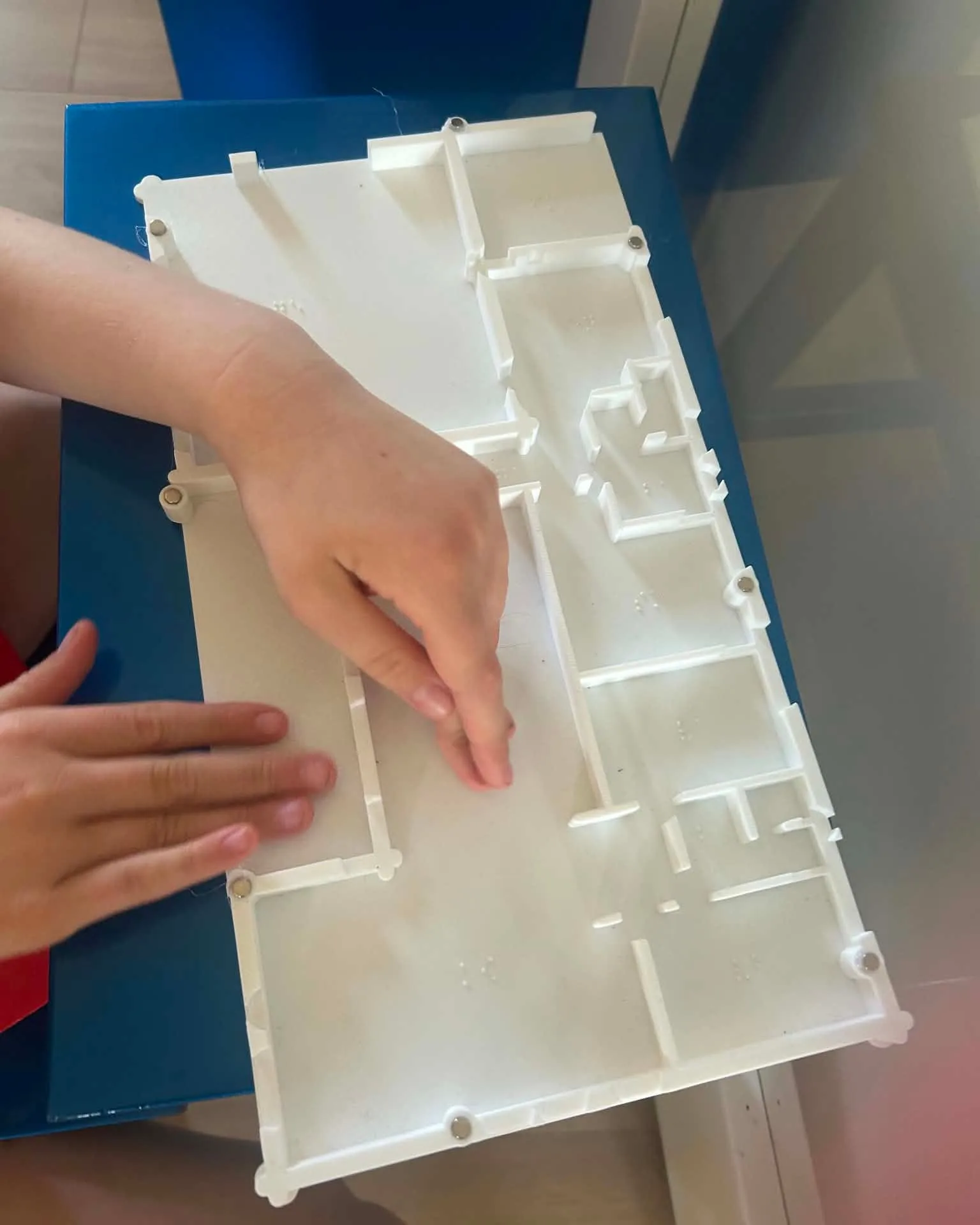
Tactile floor plan of a home with a lift-off roof, read by touch. 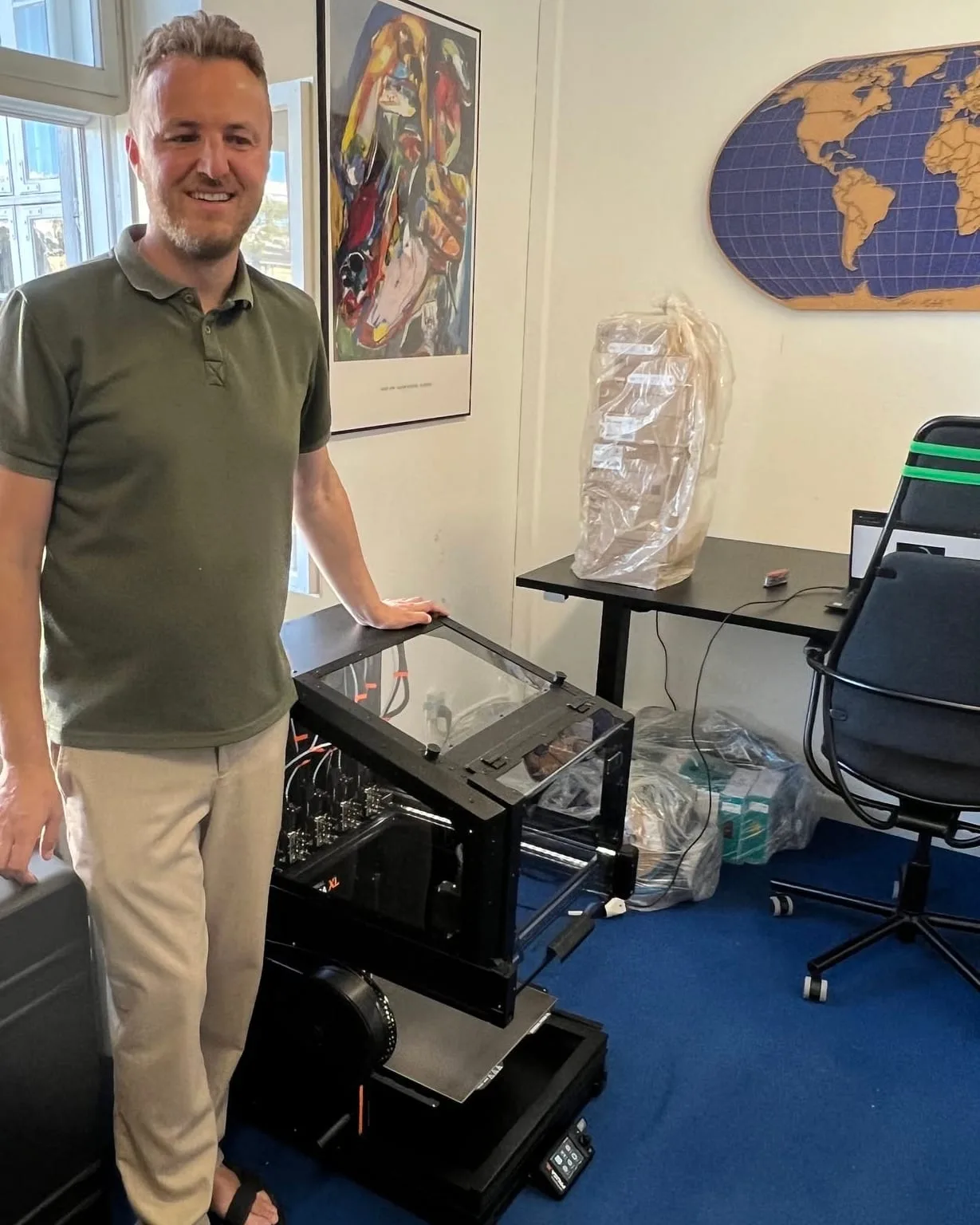
My Prusa XL with five print heads, which can print several colours and materials in one model.
How it works
Discovery call. What must the model show, who will use it, and where will it be?
Design. I draw the model and send a sample when it makes sense.
Testing. I test it by hand, and you test it with your users.
Printing and delivery. I print the model and deliver it ready to use, in the quantity you need.
Questions and answers
How do you know the model works for blind people?
I test it by hand myself, and you test it with your users, before the final print. Whatever cannot be read by touch gets redesigned.
Can the model include braille?
Yes. Signs, plans and models can carry braille text, and I proofread it by touch before you get it.
Can we order several copies?
Yes. You get the quantity you need, for example one plan per floor or per entrance.
Clients and cases
- Task
- The weekend event Syn på sagen brings together blind and partially sighted children and young people and their families. I ran a 3D printing workshop where the children got tactile models in their hands and saw how a print is made, and where the parents got answers on what tactile aids can do in everyday life. The year before, I gave the Camino talk for the same association.
It was a success in every sense. The kids were wild about 3D printing. Mads in particular has put a 3D printer on his wish list, and a couple of the parents asked for even more time and focus on the area.
Thomas Sonne Jensen, chair, LFBS, translated from Danish.

Do you have something that should be experienced by hand? Describe it and I will come back with how it can be made.
Book a free discovery call